Sudo
Sudo configuration, permissions management, and best practices.


How to Run Sudo Command Without Password
Configure the sudoers file or a drop-in file in /etc/sudoers.d to let a user or group run sudo commands without a password prompt.

How to Add User to Sudoers in Debian
Grant sudo privileges in Debian by adding a user to the sudo group or configuring a custom sudoers rule with visudo. Covers Debian 12 and 13.

How to Add a User to Sudoers in Ubuntu
Grant sudo privileges in Ubuntu by adding a user to the sudo group or editing the sudoers file. Step-by-step examples and common errors.

su Command in Linux: How to Switch Users
Use the su command to switch users, open a root login shell, and run commands as another account. Includes options, sudo su, troubleshooting, and examples.

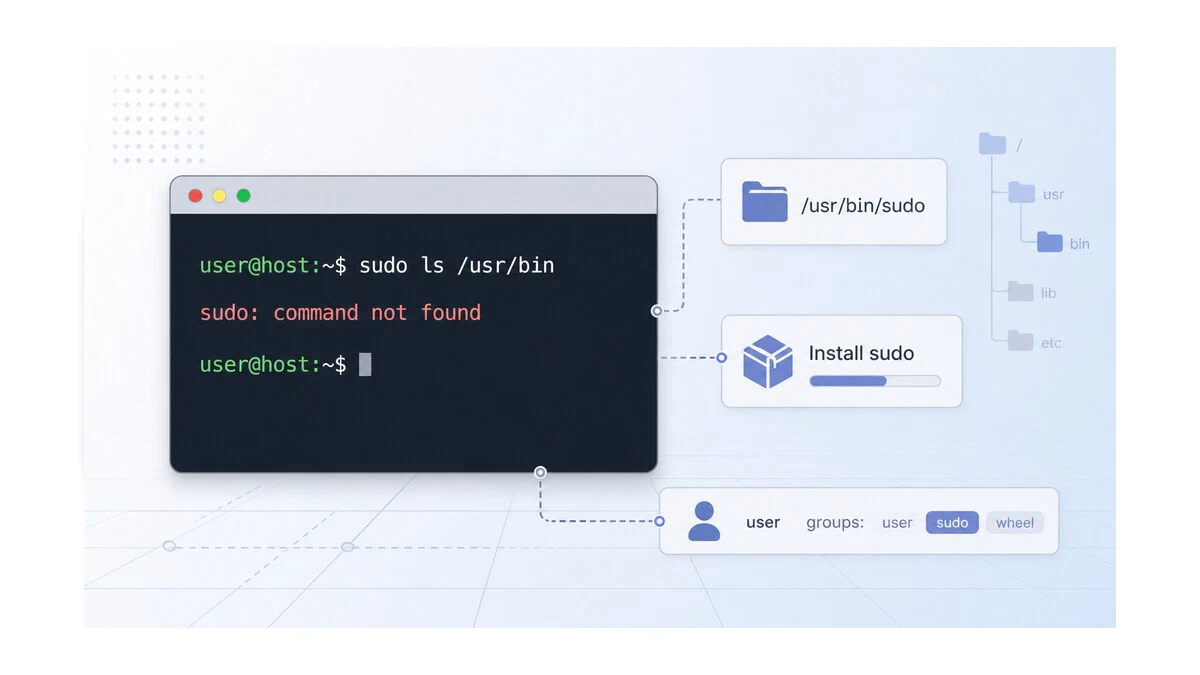
Fix "sudo: command not found" on Linux
How to fix the 'sudo: command not found' error on Linux by installing the sudo package, adding your user to the right group, and recovering from a broken PATH.
How to Add User to Sudoers in CentOS
In CentOS you have two options to grant sudo access to a user. The first one is to add the user to the sudoers file. The second option is to add the user to the wheel group.

How To Create a Sudo User on CentOS
The sudo command is designed to allow users to run programs with the security privileges of another user, by default the root user. In this guide we will show you how to create a new user with sudo privileges on CentOS.
