
Articles by Dejan Panovski
rename Command in Linux: Rename Multiple Files
Batch rename files in Linux with the rename command using Perl regular expressions. Includes syntax, examples, and tips for the Perl and C versions.

Using the SSH Config File
Set up the SSH client config file to manage multiple remote connections with custom hostnames, users, ports, keys, and jump hosts, all without long command-line flags.

Ubuntu Desktop vs Ubuntu Server: Which One Should You Use?
Ubuntu Desktop and Ubuntu Server share the same base but differ in installers, software, resource needs, and workloads. See which edition fits your system.

Delete Files and Directories in Python: os, pathlib, and shutil
How to delete single files, remove files by pattern, empty a directory, and remove directories in Python using the os, pathlib, and shutil modules.

dd Command in Linux: Copy Disks, Partitions, and Files
This guide explains how to use the dd command in Linux to write ISO images, clone disks, back up partitions, wipe drives, and test disk speed.

How to Mount and Unmount File Systems in Linux
Mount and unmount file systems in Linux with the mount and umount commands. Examples cover USB drives, ISO files, NFS shares, bind mounts, and persistent /etc/fstab entries.

How to Check Python Version
Check the Python version on Linux, macOS, or Windows, locate the active interpreter, and read version information from inside a script.
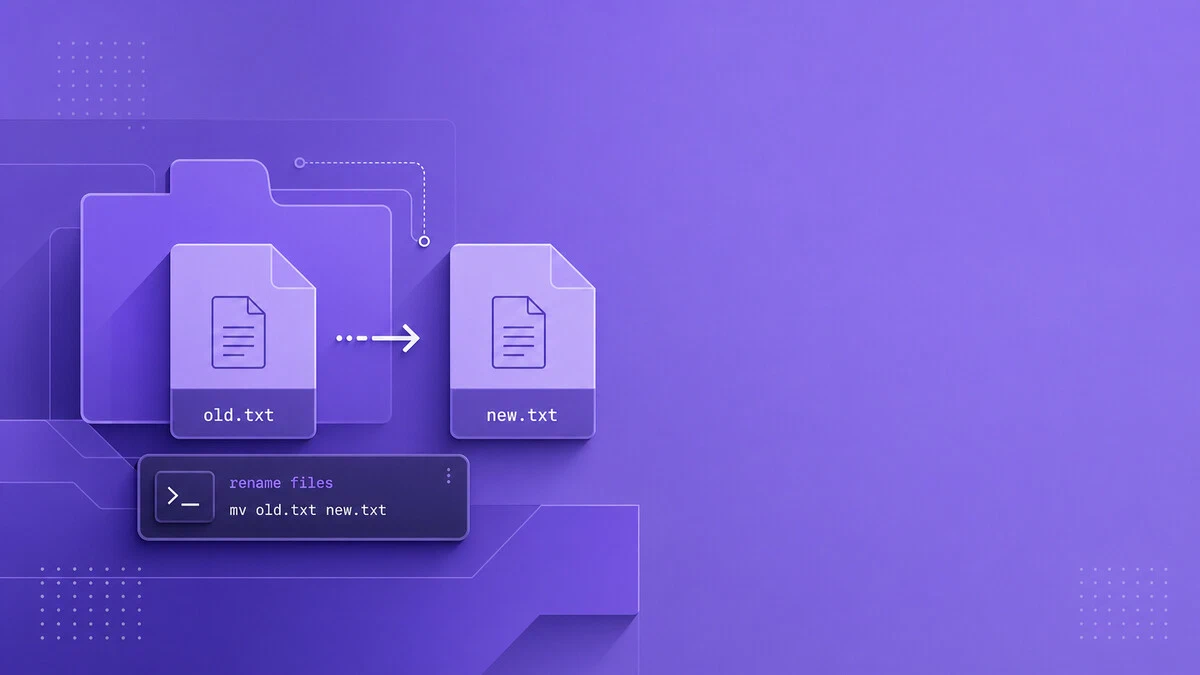
How to Rename Files and Directories in Linux
Rename files and directories in Linux using mv for single renames and rename for batch filename changes, including extension changes, case conversion, and safe previews.
How to Set a Static IP Address on Ubuntu Server and Desktop
Set a static IP address on Ubuntu with Netplan on servers, nmcli from the command line, or GNOME Settings on the desktop, and test the change safely with netplan try.

How to Create Groups in Linux: groupadd Command
This guide explains how to create groups in Linux using the groupadd command, including how to set a custom GID, create system groups, and manage group options.

GitHub CLI: Manage Repositories, Issues, and Pull Requests
Use GitHub CLI to create and clone repositories, manage pull requests and issues, inspect workflow runs, set Actions secrets, publish releases, and call the GitHub API.
scp Command in Linux: Secure File Transfer Examples
SCP copies files securely between local and remote hosts over SSH. This guide covers syntax, uploads, downloads, custom ports, and the options you need for everyday transfers.

How to Set Git Username and Email with git config
Set Git username and email with git config, both globally and per repository, check the current values, and update existing settings.

Free Command in Linux
Learn how to use the Linux free command to check RAM and swap usage. Includes output explained, human-readable format, and useful options.

How to Check Memory Usage in Linux
Check RAM and swap usage in Linux with free, top, /proc/meminfo, and ps_mem, and find out which processes are consuming the most memory.

Fix the NO_PUBKEY GPG Error on apt update
Fix the apt NO_PUBKEY error on Ubuntu and Debian by installing a verified repository signing key under /etc/apt/keyrings and using signed-by.

Create a Linux Swap File
How to create and enable a swap file on Linux, configure swappiness, resize an existing swap file, and remove it when no longer needed.

ifconfig Command in Linux: Configure Network Interfaces
Read the ifconfig output field by field, fix command not found, and assign IPv4 and IPv6 addresses, MTU, and MAC values, with the ip equivalent alongside.

How to Change the Swappiness Value in Linux
Check and change Linux swappiness with sysctl, including the 0 to 200 range, persistent settings, and guidance for disk swap and zram.

dpkg Command in Linux: Install and Manage Debian Packages
Use dpkg to install, remove, query, and inspect Debian packages on Ubuntu, Debian, and other Debian-based distributions.
