Bash
Bash scripting, shell fundamentals, automation patterns, and common pitfalls.
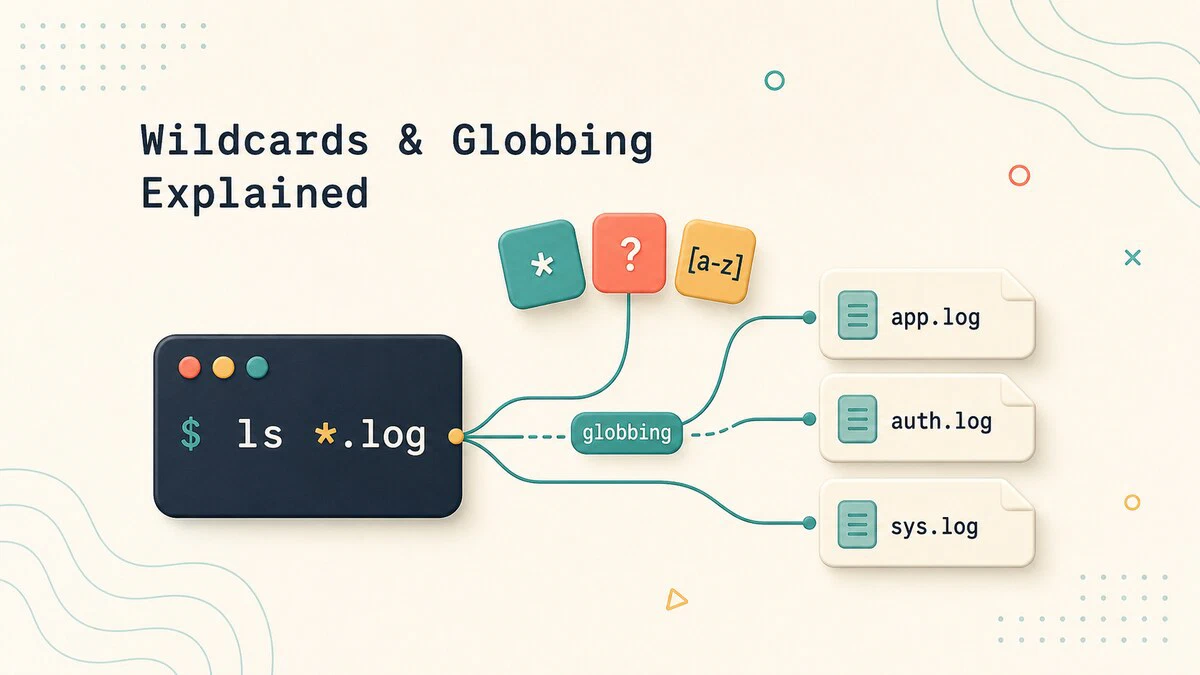
Linux Wildcards and Globbing Explained
How shell wildcards and globbing work in Linux: the *, ?, and [...] patterns, brace expansion, why globbing is not regex, and how to control it with quoting.
How to Check if a Command Exists in Bash
Check whether a command exists in Bash with command -v, capture its path, validate several dependencies, and compare type, hash, and which.
Bash Exit Command and Exit Codes
The Bash exit command terminates a shell or script and returns an exit code. This guide covers exit status, the $? variable, exit code conventions, set -e, and practical script examples.

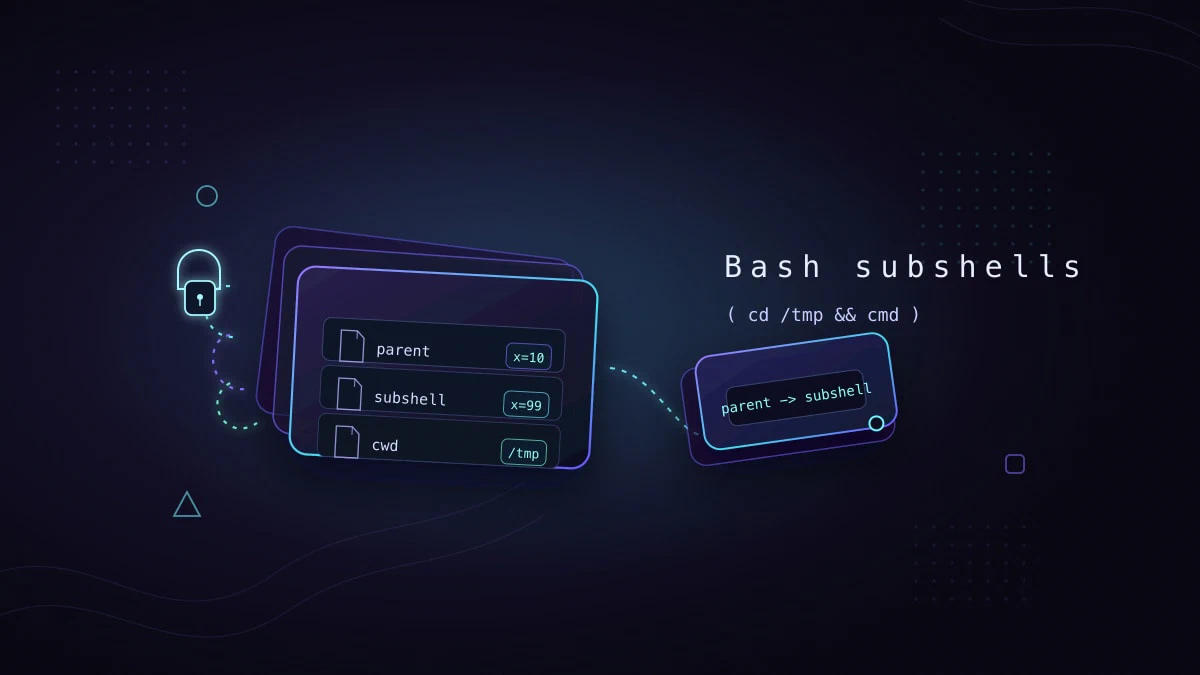
Bash Subshells: Isolate Variables and Directory Changes
Bash subshells run commands in an isolated shell environment. This guide explains parentheses, variable scope, directory changes, command substitution, pipelines, and exit codes.
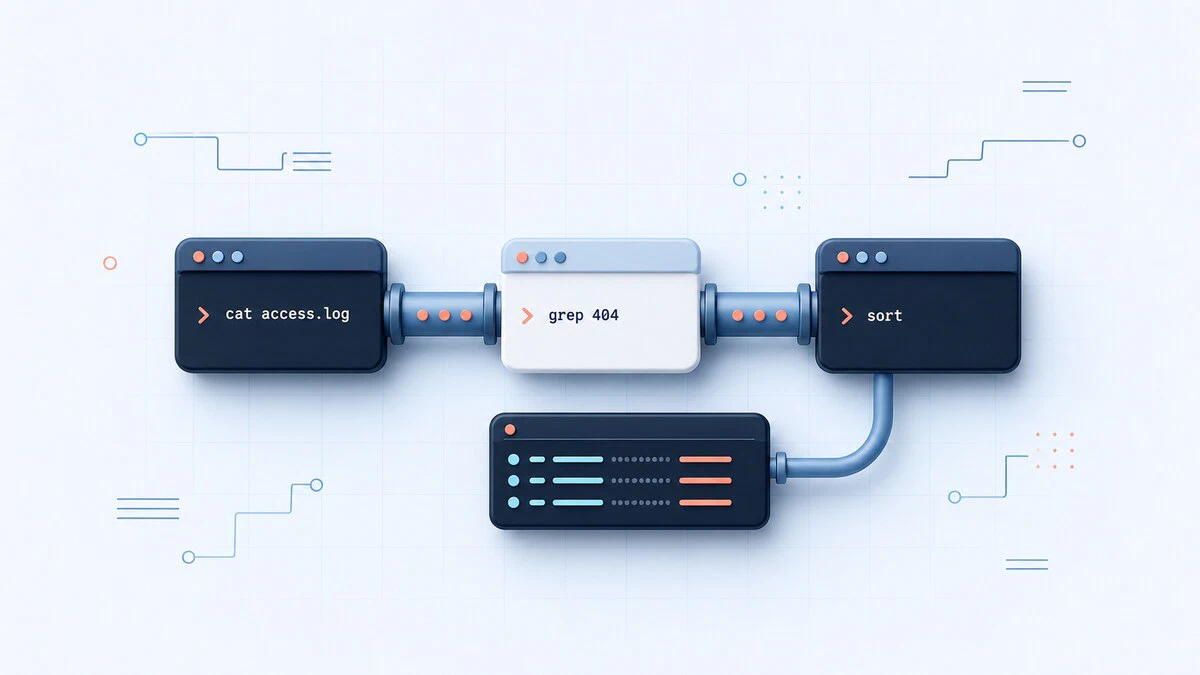
Linux Pipes Explained: How to Use the | Operator
Linux pipes connect command output to another command's input. Learn the | operator, pipefail, stderr piping, xargs, named pipes, and process substitution.
Bash Array Operations: Length, Search, Slice, and Reverse
Practical Bash array operations for checking length, finding values, slicing, reversing, iterating, appending, prepending, and removing elements.

Bash: Check if String Contains Substring
Four ways to check if a string contains a substring in Bash: wildcard matching, the case statement, the regex operator, and grep. Includes examples and a Quick Reference.

Bash set Command: set -e, set -x, and set -u Explained
How the bash set builtin changes shell behavior, with practical examples of set -e to exit on errors, set -u to catch unset variables, set -x to trace execution, and pipefail.

Bash Arithmetic: Integer and Floating-Point Math
How to do arithmetic in Bash with the (( )) operator, $(( )) expansion, the let builtin, and bc or awk for floating-point math the shell cannot do natively.

Bash String Manipulation: Substring, Replace, Length, and More
Bash string manipulation using parameter expansion: extract substrings, replace text, strip prefixes and suffixes, change case, and check for substrings with practical examples.

Bash: Write to File
Redirect output to files in Bash using the > and >> operators, tee command, and heredocs, with examples for overwriting, appending, and writing multiple lines.

Bash Split String: Split a String by Delimiter
How to split a string in Bash by a delimiter using read, IFS, tr, awk, and parameter expansion, with practical examples for scripts.

Bash break and continue Statements
The break and continue statements in Bash control loop execution. Use break to exit a loop early and continue to skip the current iteration.
pushd and popd Commands in Linux: Navigate Directories with a Stack
The pushd and popd commands let you save directories to a stack and jump between them instantly. This guide covers syntax, the dirs command, stack rotation, and practical workflow examples.

Bash printf Command
A practical guide to printf in Bash: formatting numbers, strings, and alignment.

Bash read Command
The Bash read command reads a line from standard input and splits it into variables. This guide covers IFS, prompts, silent input, timeouts, arrays, file reading, and practical script examples.

Bash Range: Sequence Expression Syntax and Examples
The Bash sequence expression generates a range of integers or characters using {START..END} syntax. This guide covers step increments, zero-padding, for loop usage, and how to handle variable ranges with seq.

Bash Comments: Single-Line, Multiline, and Best Practices
Learn how to comment in Bash scripts with single-line, inline, and multiline comment patterns. Includes block comment workarounds and best practices for readable shell scripts.

Bash Arrays
A complete guide to Bash arrays: create indexed and associative arrays, access elements, loop, slice, add and remove items, and check array length.

Bash Select (Make Menus)
Learn how to use the Bash select construct to create interactive menus in shell scripts. Includes syntax, practical examples, and combining select with case.
