All Articles
Browse all Linuxize tutorials, guides, and references.
Initial Server Setup on Ubuntu 26.04
Prepare a new Ubuntu 26.04 server with a sudo user, SSH key authentication, UFW firewall rules, a hostname, timezone settings, and system updates.

Linux cp Command: Copy Files and Directories
The cp command copies files and directories in Linux. This guide covers recursive and archive copies, copying directory contents, overwrite control, and attributes.

How to Set Up Passwordless SSH Login
Set up passwordless SSH login with Ed25519 or RSA key pairs. Copy public keys with ssh-copy-id, use the ssh-agent, and disable password authentication for hardened access.

How to Use sed to Find and Replace Strings in Files
Replace strings in files with sed: run sed -i 's/old/new/g' file. Covers global, case-insensitive, word-boundary, regex, line-range, and recursive replace.

Bash Best Practices: Writing Safer, Cleaner Scripts
Practical Bash best practices for writing safer and more predictable scripts, covering strict mode, quoting, error handling, and everyday patterns.

How to List Groups in Linux
Find which groups a user belongs to in Linux using the groups, id, and getent commands. Includes how to list all groups and group members on the system.

How to Redirect stderr to stdout in Bash
Redirecting stderr and stdout in Bash using 2>&1, &>, and other operators. Covers file descriptors, appending, piping errors, and discarding output with /dev/null.

How to Delete Lines in Vim / Vi
Delete lines in Vim or Vi with dd, :%d, visual mode, or :g/pattern/d. Examples for single lines, ranges, all lines, and pattern-based deletion.

How to Remove a Symbolic Link (Symlink) in Linux
Remove symbolic links in Linux with rm, unlink, or find. Clean up broken symlinks and avoid the trailing-slash trap that can remove target directory contents.

How to Run a Bash Script in Linux
Run a bash script in Linux with chmod +x, the bash interpreter, or source. Step-by-step examples with common errors and fixes.

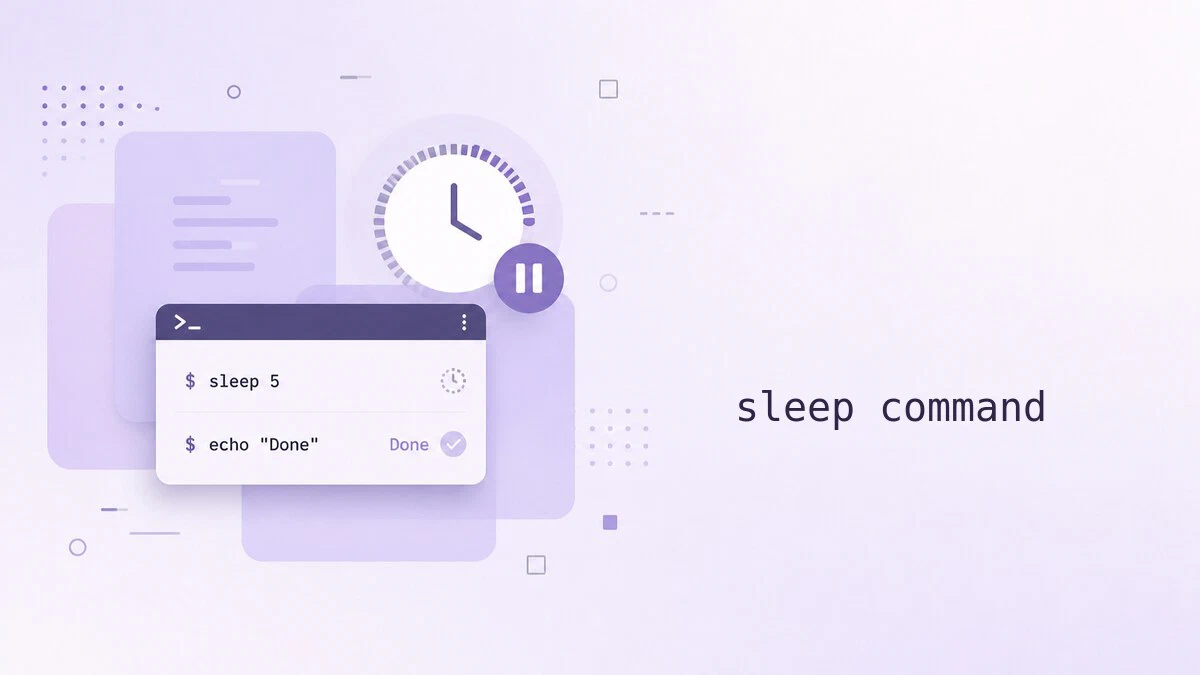
sleep Command in Linux: Pause a Bash Script
How to use the sleep command in bash to pause script execution. Examples cover seconds, minutes, sleep infinity, retry loops, countdowns, and background sleeps.
How to Create a Self-Signed SSL Certificate with OpenSSL
Generate a self-signed SSL/TLS certificate and private key on Linux using the openssl command. Covers RSA and ECDSA keys, Subject Alternative Names (SAN), and non-interactive generation.

Tar Command in Linux: Create and Extract Archives with Examples
Create, extract, list, and compress tar archives in Linux. Examples for gzip, bzip2, xz, and zstd, plus excluding files, wildcard extraction, and stripping path components.

awk Command in Linux: Syntax, Patterns, and Examples
Use awk to extract columns, filter records, and build reports from the command line, with practical examples of patterns, built-in variables, functions, and arrays.

Linux basename Command: Get File Name from Path in Bash
Get just the file name from a full path in Bash. This guide covers basename options, suffix stripping, and how it compares to parameter expansion.

echo Command in Linux: Print Text and Variables
Print text, variables, script arguments, and exit codes with echo in Linux, plus escape sequences, colored output, and the quoting pitfalls to avoid.

Grep Command in Linux with Examples
The grep command searches files for text patterns. Quick examples for case-insensitive, recursive, whole-word, regex, and context-line searches.

Grep Multiple Patterns: Match Strings, Words, and Regex
Search for multiple patterns or strings at once with grep using the -e flag, fixed-string matching, alternation, and pattern files.

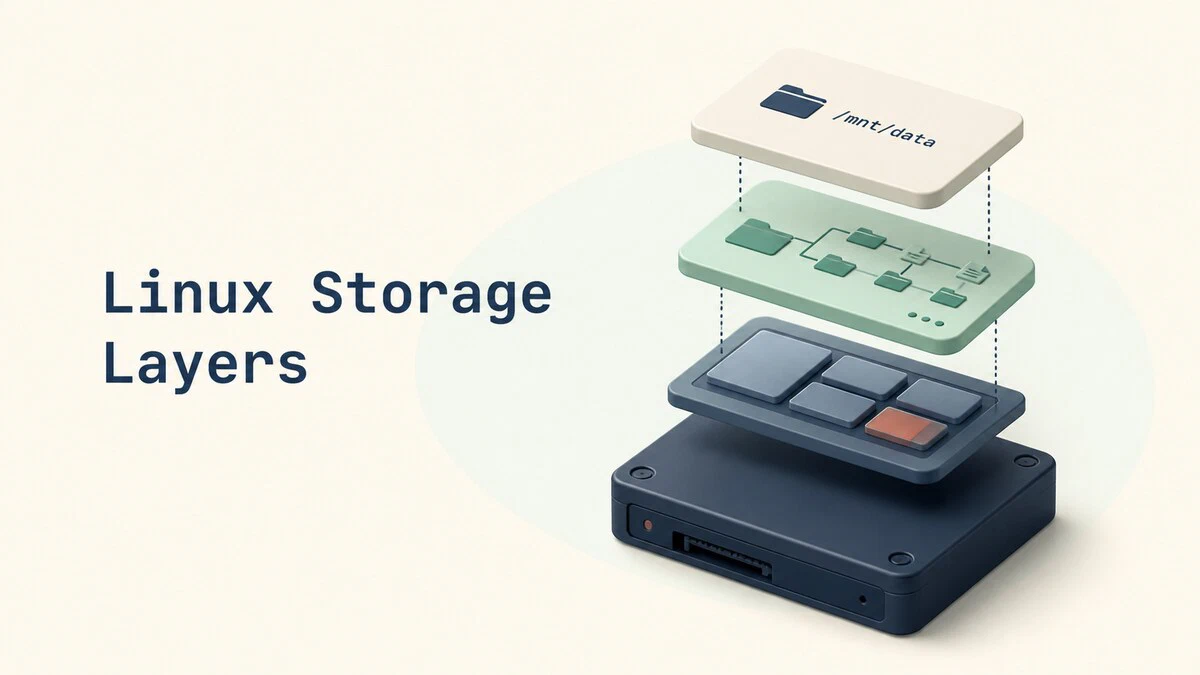
Block Devices, Partitions, and Filesystems in Linux Explained
Linux storage works in layers: block device, partition, filesystem, mount point. This guide explains what each layer does and which command inspects it.
Grep Exclude: Patterns, Files, and Directories
Use grep to exclude patterns, files, and directories from search results. Examples for --invert-match, --exclude, --exclude-dir, and --include.
